You can buy a thousand sign-ups this week. Plenty of channels will sell them to you, and a community campaign built the wrong way will produce them too – a punchy offer, a giveaway, a "sign up to win," and the number looks great on Monday. Then you check week four. Almost none of them did anything. No funded account, no first order, no second visit.
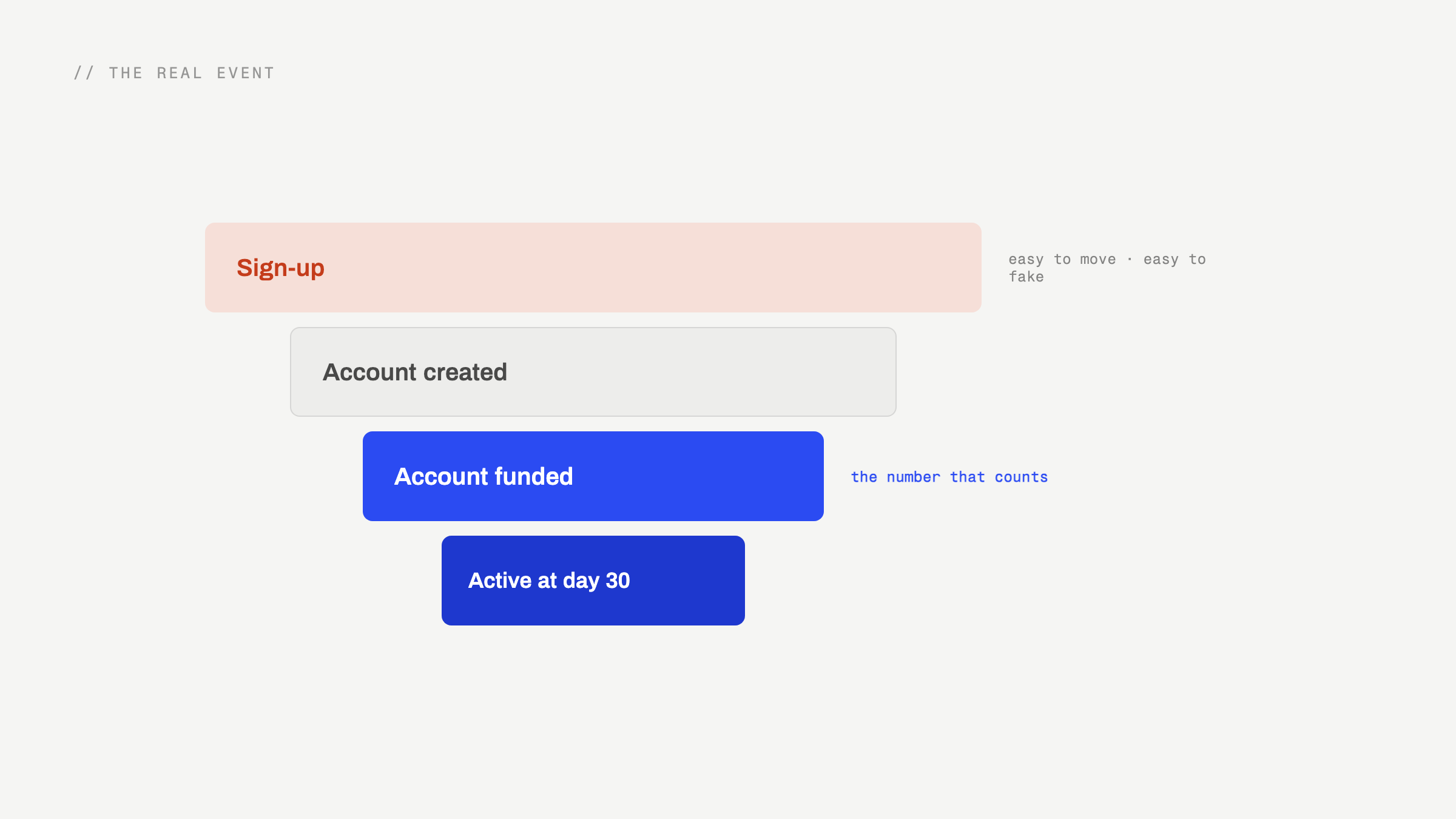
Sign-ups are the easiest number to move and the easiest to fool yourself with. The number that counts is the first one that costs the user something real: the funded account, the completed purchase, the first payment sent. Everything before that is a promise.
How much this matters depends on what you sell. For a $9 app, a sign-up sits close to the money. For a fintech, where the real event is a funded account or a first international payment, the gap between "signed up" and "worth anything" is enormous – and a campaign tuned for the first number will happily pack your funnel with people who never reach the second.
So how do you design a community campaign for the event that counts?
Pick the event before you write the brief
Decide, up front, what a good outcome is. Account created is a start. Account funded is better. First transaction is the one you'd actually pay for. Name it, then build the campaign backwards – the offer, the incentive, and the call to action all pointing at that event, not at the sign-up.
Match the incentive to the depth
A discount on a first purchase pulls people toward a purchase. "Sign up to win" pulls people toward signing up and stopping. If you want funded accounts, reward the funding. Members read an incentive as a set of instructions and follow it literally.
Track past the click
A tracked link tells you who arrived. It says nothing about who stayed. To know whether a room produced value, you need the downstream event tied back to the community – account funded, active at day 30 – not the tap alone. Two rooms can look identical on click-through and look nothing alike two weeks later.
Fifty people who fund accounts beat a thousand who bounce. Every time.
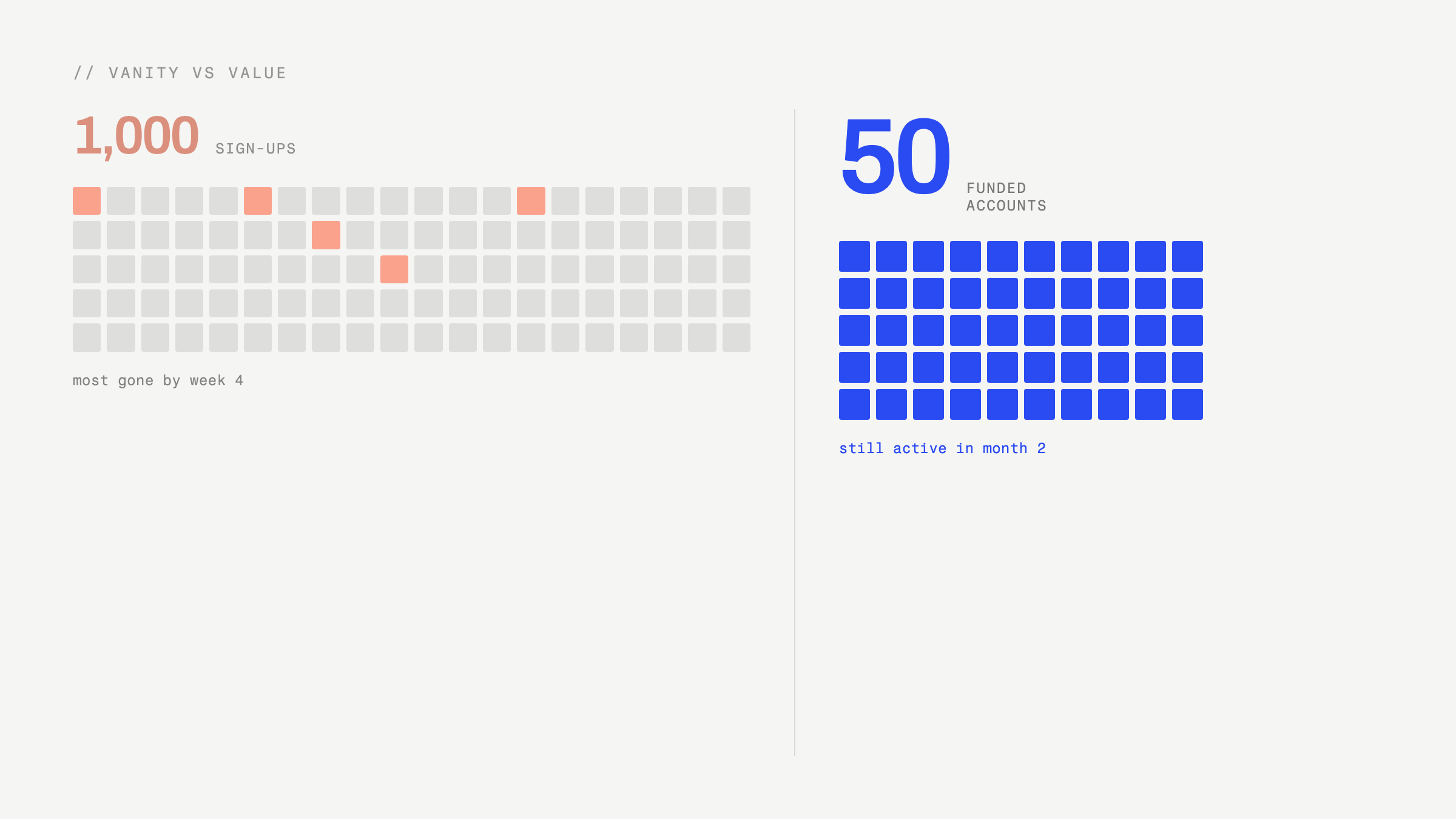
Here's the honest part. Designing for activation usually produces a smaller headline number, and that number is harder to celebrate. A thousand sign-ups feels like a win. Fifty funded accounts feels modest, right up until you notice the fifty are still there in month two and the thousand are gone. Brands that hold their nerve on this spend less to acquire users who actually count.
Good communities know their members well enough to tell you, before you spend a cent, whether a room converts or just claps. Ask them. Then pay for the outcome, not the applause.