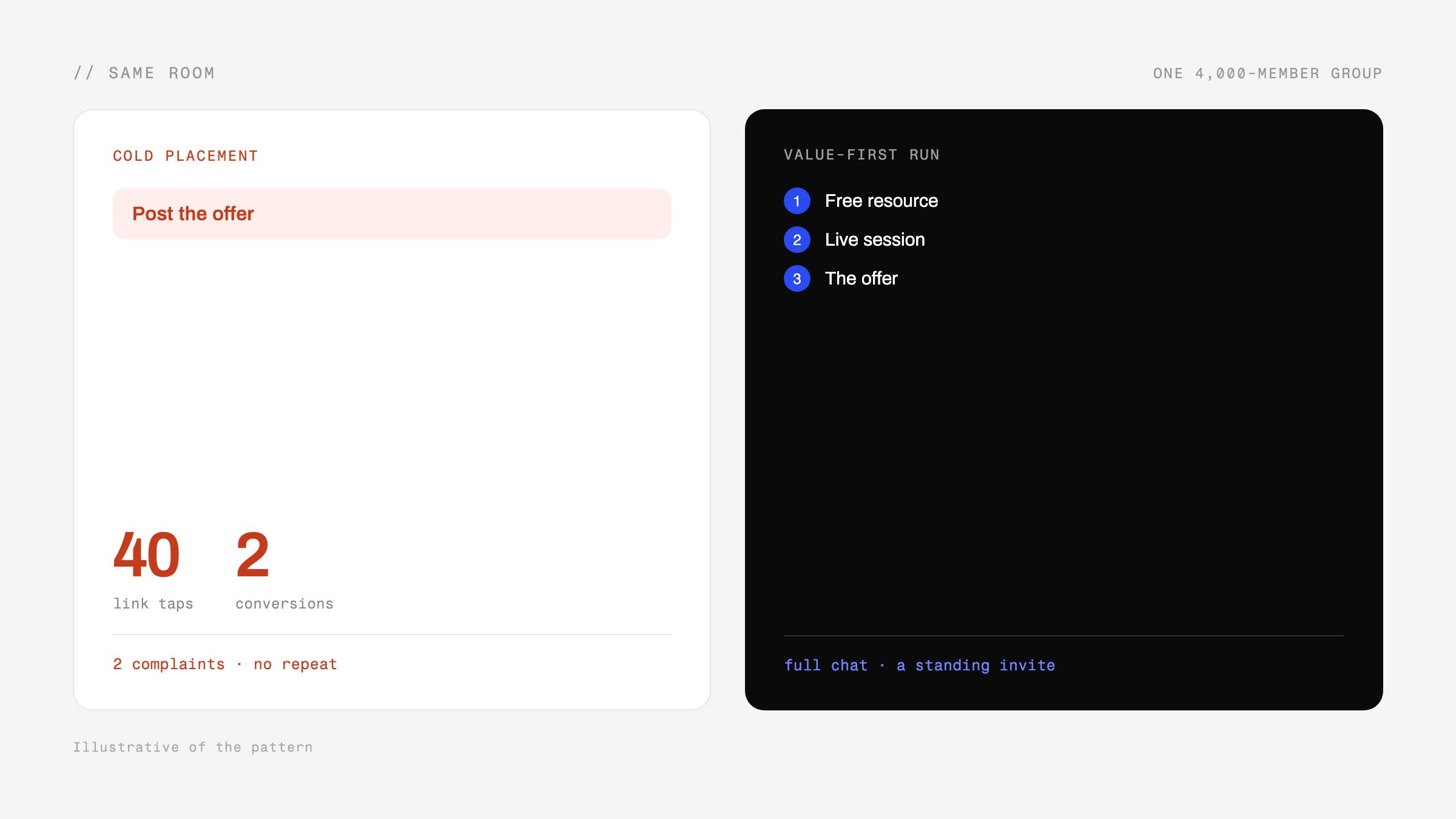
A brand buys a placement in a 4,000-member freelancer group, pastes in a sign-up link and a discount code, and waits. Forty people tap the link. Two convert. The admin fields a few "since when do we allow ads in here" replies and quietly decides the next one isn't worth the hassle.
That's the base case for community advertising. It's what you get when you treat a room full of people as an ad slot.
Private communities run on one rule: people are there for each other, not for you. You're a guest. Guests who walk in and pitch don't get asked back. So the offer is the last thing you post, not the first – and the brands that understand this get results the cold-poster never will.
We think about it as a ladder. Each rung earns the right to the next.
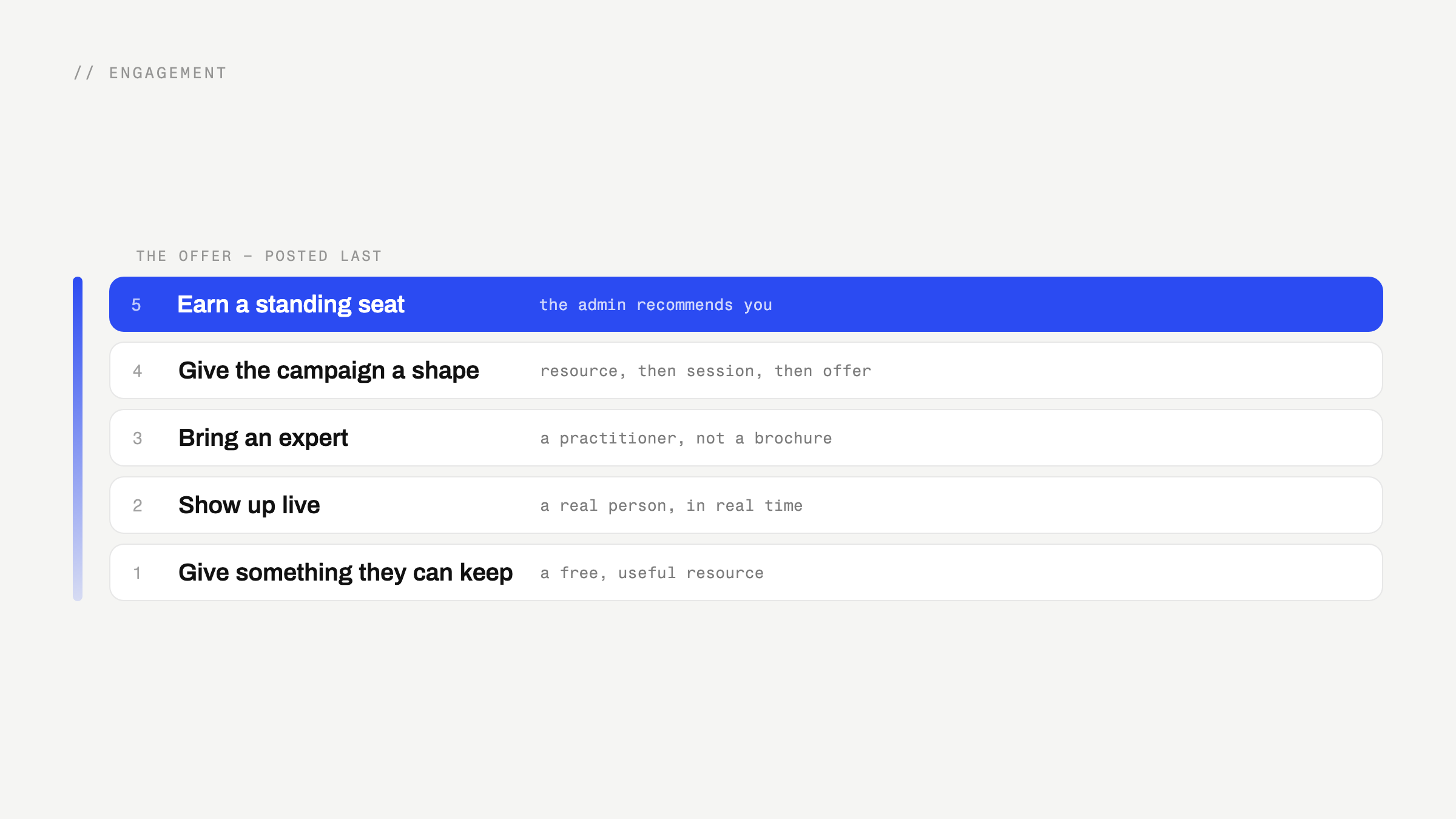
Give before you ask. Start with something a member can keep and use whether or not they ever buy from you. A one-page guide, a rate benchmark, a teardown of a problem the group argues about every week. Free value buys attention that a discount code never will.
Show up live. A link is passive. A person answering questions in real time is not. Run a 30-minute AMA or a short session in the group's own space, on a topic the members already care about. You stop being a logo and start being someone in the room.
Bring an expert, not a brochure. The fastest way to lose a technical audience is to send a marketer to talk at them. Send someone who has done the thing – a customer, an operator from your team, a hiring manager who sources from exactly this kind of room. (More on that in the next post.)
Give the campaign a shape. One clever post rarely moves anyone. A run that opens with a free resource, follows with a live session, and closes with a clear offer gives a member three chances to say yes on their own timing.
Earn a standing seat. The best outcome is an admin recommending you inside a conversation months later, unprompted, because the first thing you did in their room was useful.
Treat the first placement as the start of a relationship, not the whole of it.
None of this is slower, by the way. The freelancer group that ignored the cold link will show up in numbers for a 30-minute session on getting paid by overseas clients – if the person running it actually knows the answer. Same room, same product, completely different result.
You don't need every rung for every campaign. A small, tight community might convert off a single well-placed resource. A skeptical, high-value audience might need all five. Read the room, then decide how far up you have to climb.
The offer still matters. It just goes last.