Most brands ask for the same thing when they enter a community: a post. One placement, one link, done. It's the simplest format and sometimes it's the right one. But it sits at the bottom of a longer menu, and reaching for it every time is why a lot of community budgets underperform.
Here's the menu, and when each option earns its place.
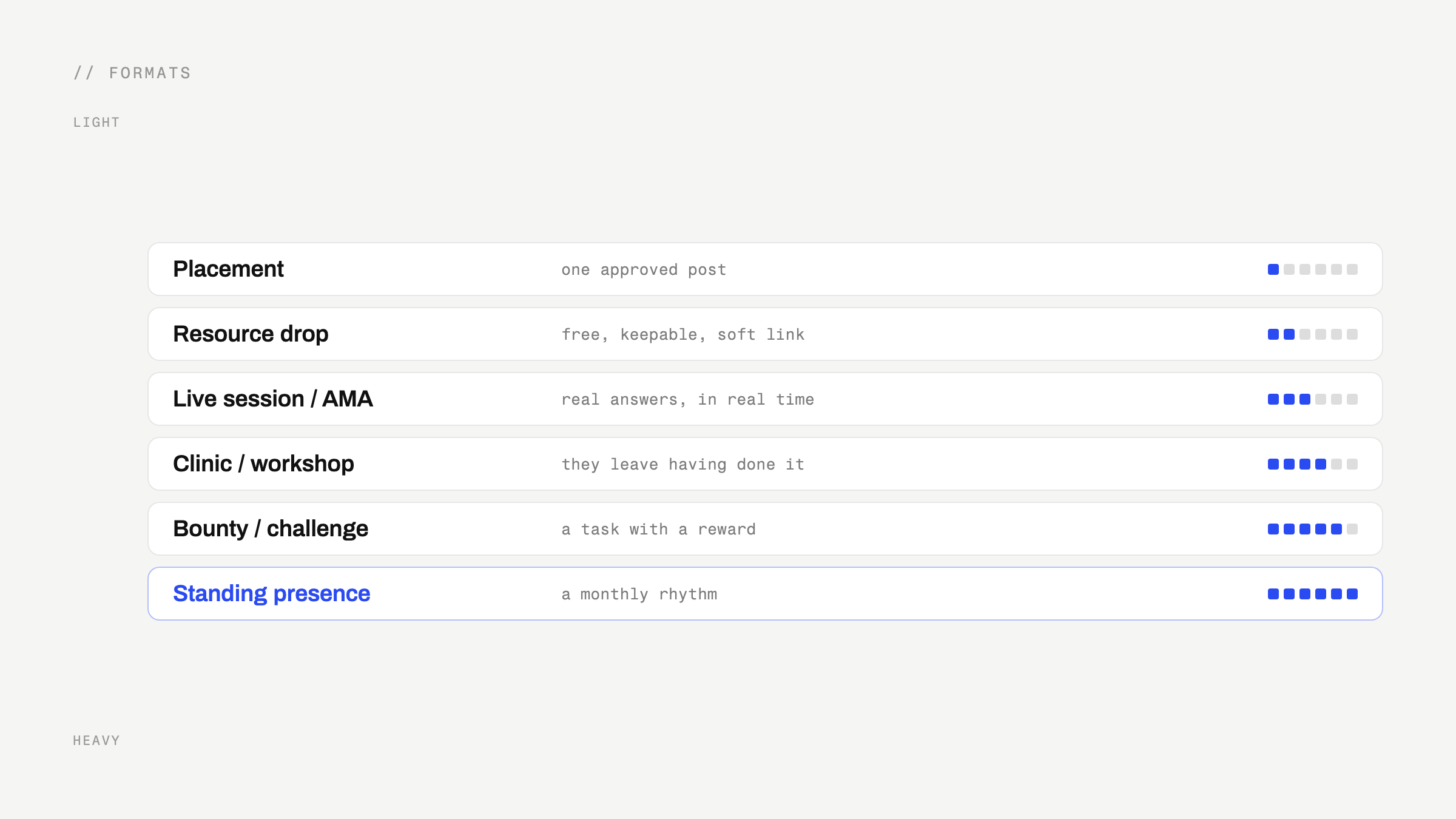
The placement. A single approved post from the admin. Fast, cheap, and fine when the offer is genuinely good and the audience is already warm. Use it to launch something, announce a deal, or test whether a room responds at all before you invest more.
The resource drop. A free, keepable thing – a guide, a benchmark, a template – posted with a soft link. Best when the audience is skeptical or the product needs explaining. It buys goodwill you can spend later.
The live session or AMA. Thirty to sixty minutes of real answers in the group's own space. This is the format for complex or high-trust products, where a member wants to hear a real person before they act. More effort in, more trust out.
The clinic or workshop. A hands-on session where members leave having actually done something – set up an account, fixed a real problem, built a thing. The heaviest format, and the strongest, for products where the "aha" only lands once someone tries it.
The bounty or challenge. A task with a reward – ship something, complete a setup, refer a friend who funds an account. Good when you want action rather than attention, and the community likes to compete.
The standing presence. A monthly rhythm rather than a one-off: the brand shows up in a set of rooms with useful things, over and over, until admins recommend it on their own. This is where the strongest community programs end up.
Pick the format by what you're asking the member to do, not by what's cheapest to buy.
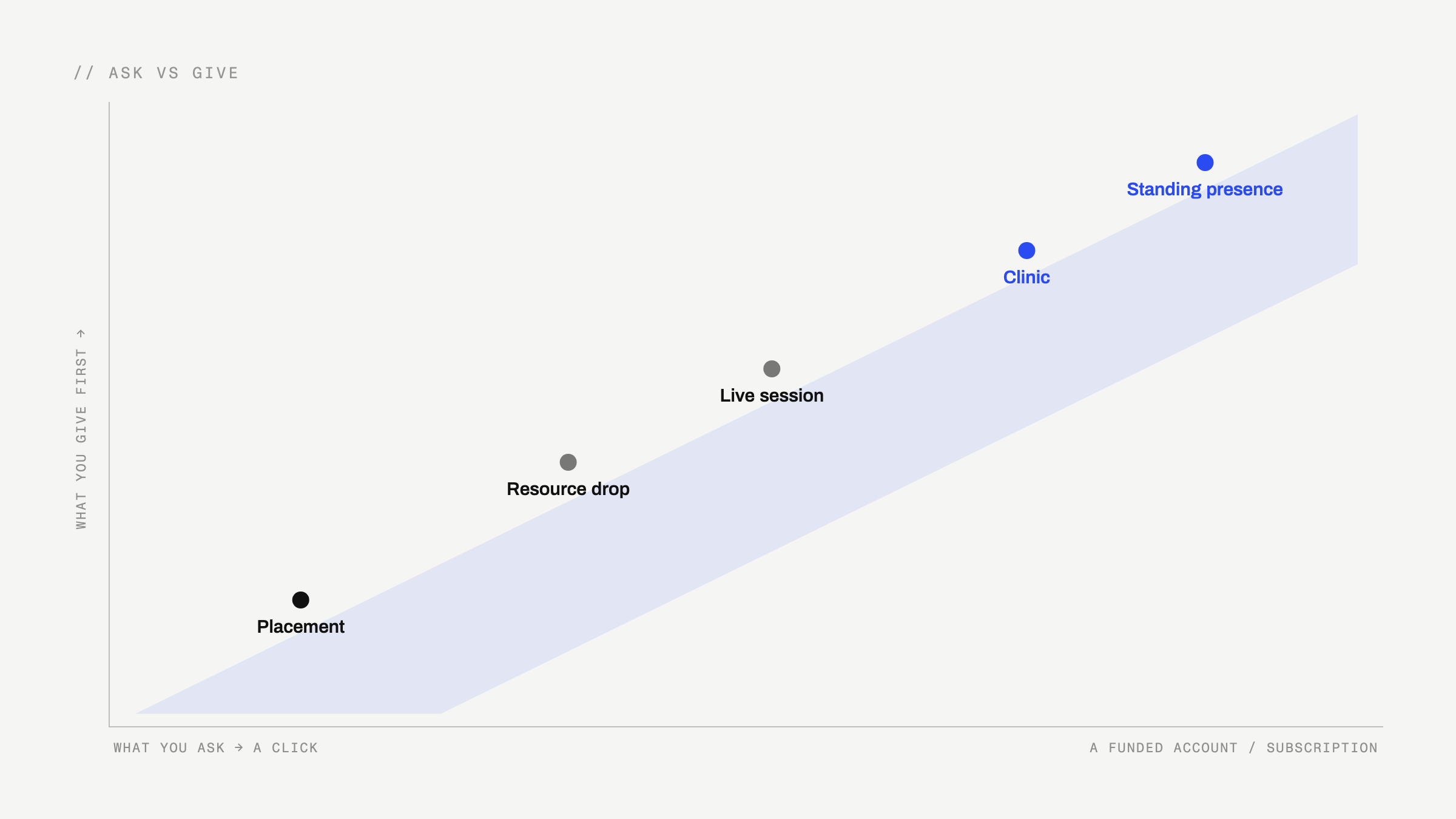
A rule of thumb: the more you ask of a member, the more you have to give first. A placement asks for a click, so a good offer carries it. A funded account or a paid subscription asks for real commitment, and a single post won't earn that – that's clinic and standing-presence territory.
Strong programs mix formats over time. Open a room with a resource drop, prove the fit with a session, run a placement once the audience knows you, then settle into a monthly presence in the handful of rooms that convert. Each format does a job the others can't.
The mistake is treating "a post" as the whole product. It's the entry-level item. The menu is longer, and the brands that read the whole thing get more out of the same rooms.