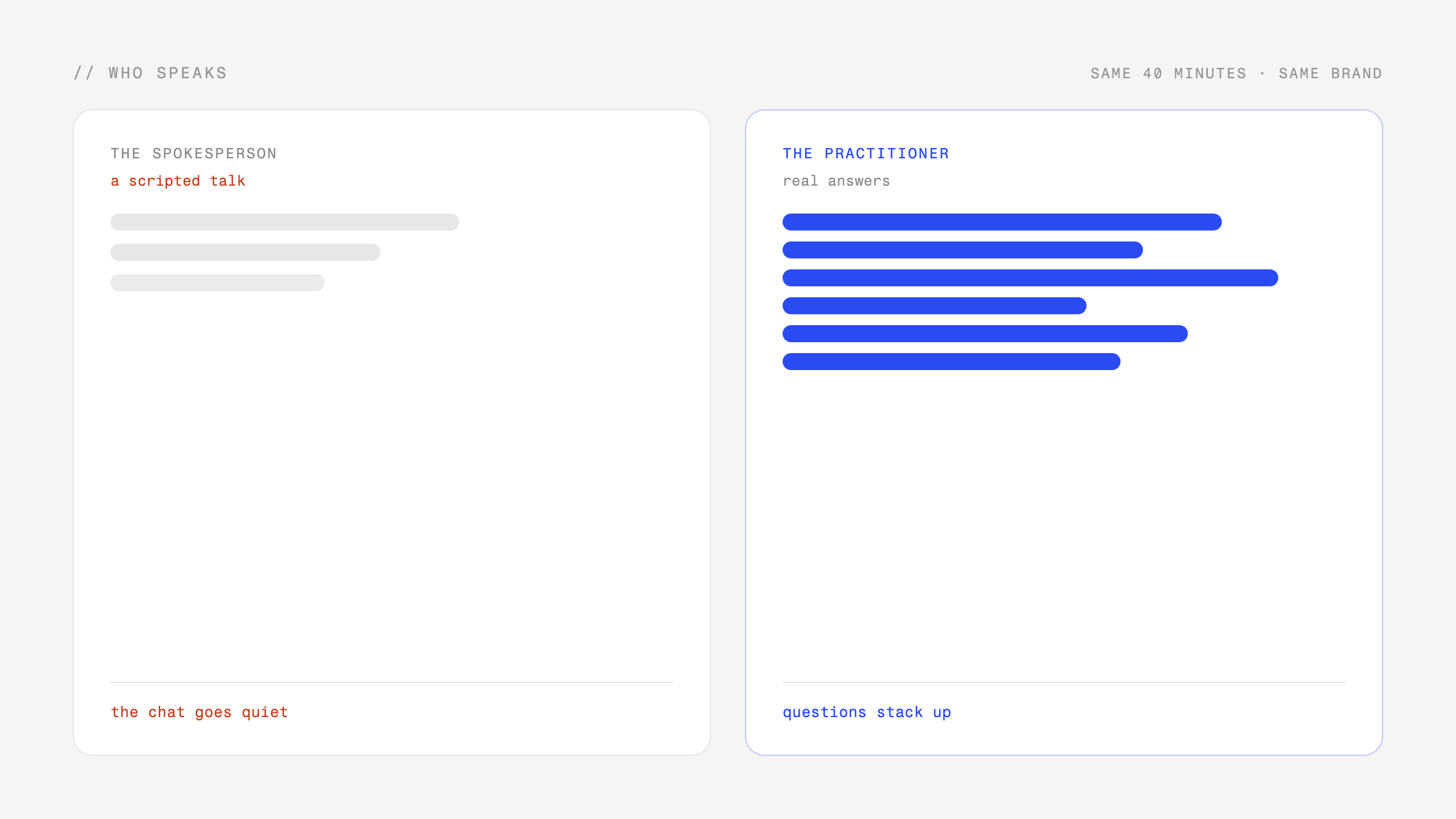
Two versions of the same session. In the first, a brand sends its marketing lead into a developer community to talk about the product. In the second, it sends a developer who ships with that product every week, plus someone who hires people out of exactly this kind of room. Same 40 minutes, same brand. The second one fills the chat with questions. The first one empties it.
Communities have a very good ear for this. They can tell within a minute whether the person talking has done the thing or has been briefed to describe it. The person you put in the room is the campaign. Get that wrong, and no format saves you.
Here's why it works. A practitioner can answer the follow-up. When a member asks the question that isn't in the deck – the edge case, the thing that broke last week – a spokesperson deflects and a practitioner just answers. That unscripted moment is typically what convinces a skeptical room that the brand behind the session is worth a look.
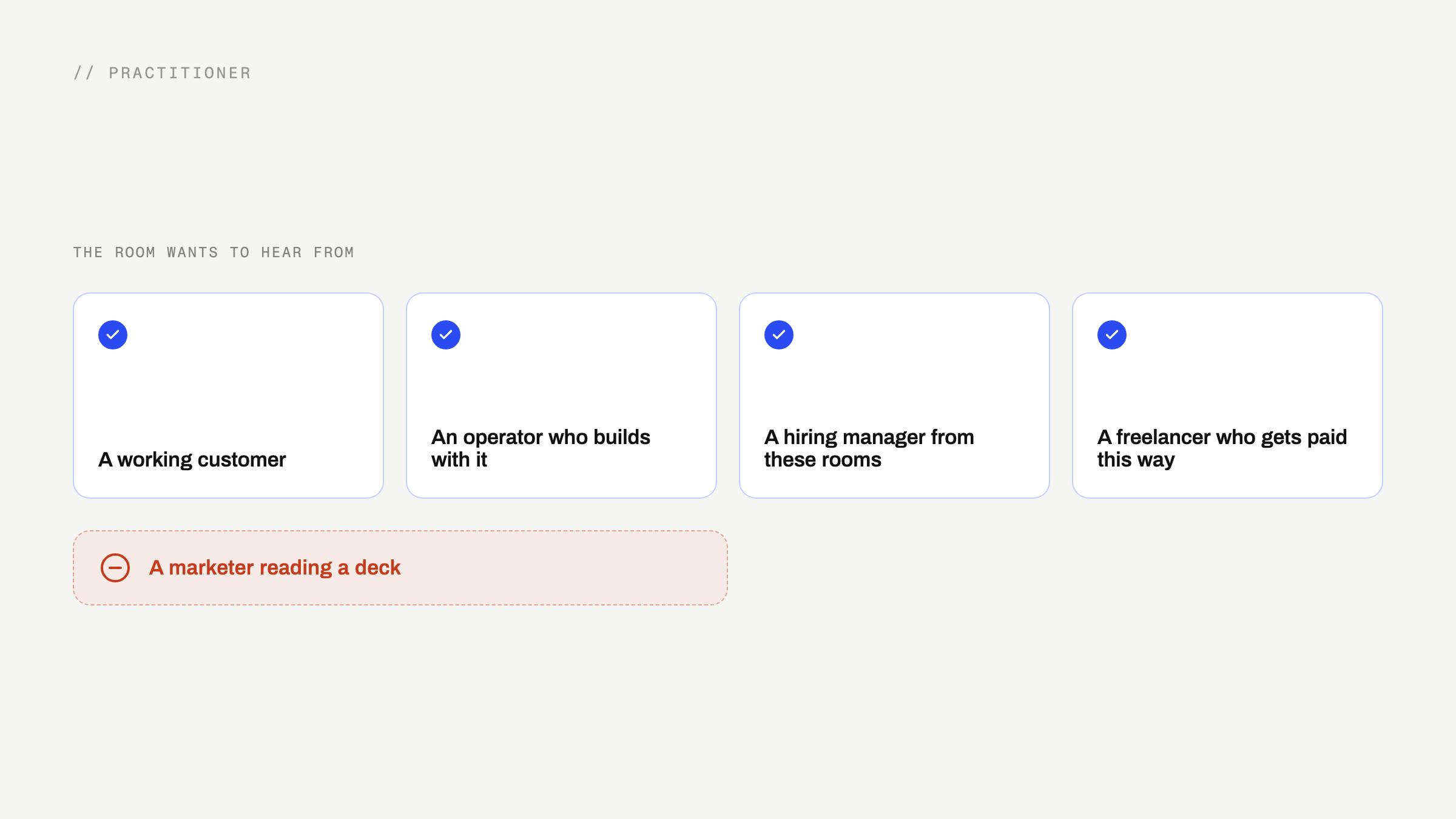
Who counts as a practitioner?
Someone who uses the product to do real work. A customer willing to talk honestly, including about what was hard. An operator from your own team who builds with the thing, rather than the person who markets it. For a session aimed at people chasing overseas work, that might be a freelancer who actually gets paid that way, or a hiring manager who sources from these communities – someone whose ordinary day is the thing the audience wants.
What the brand does instead
Set the frame and step back. Pick the topic with the admin, brief your practitioner on the one or two things worth mentioning about the product, and let the rest be genuinely useful. A soft line at the end – "we built X, here's where to start" – lands far better after 30 minutes of real help than a pitch delivered cold.
A room forgives a product it's unsure about. It doesn't forgive being talked down to.
There's a cost here, and it's fair to name it. Practitioners are busy, and getting a good one into a community session takes more planning than writing a post. But that's the entire point. The effort is visible to the audience, and it reads as respect.
Brands that treat a community session as a speaking slot for their best salesperson keep wondering why the numbers stay flat. The ones that send someone the room actually wants to hear from, stop having to wonder.