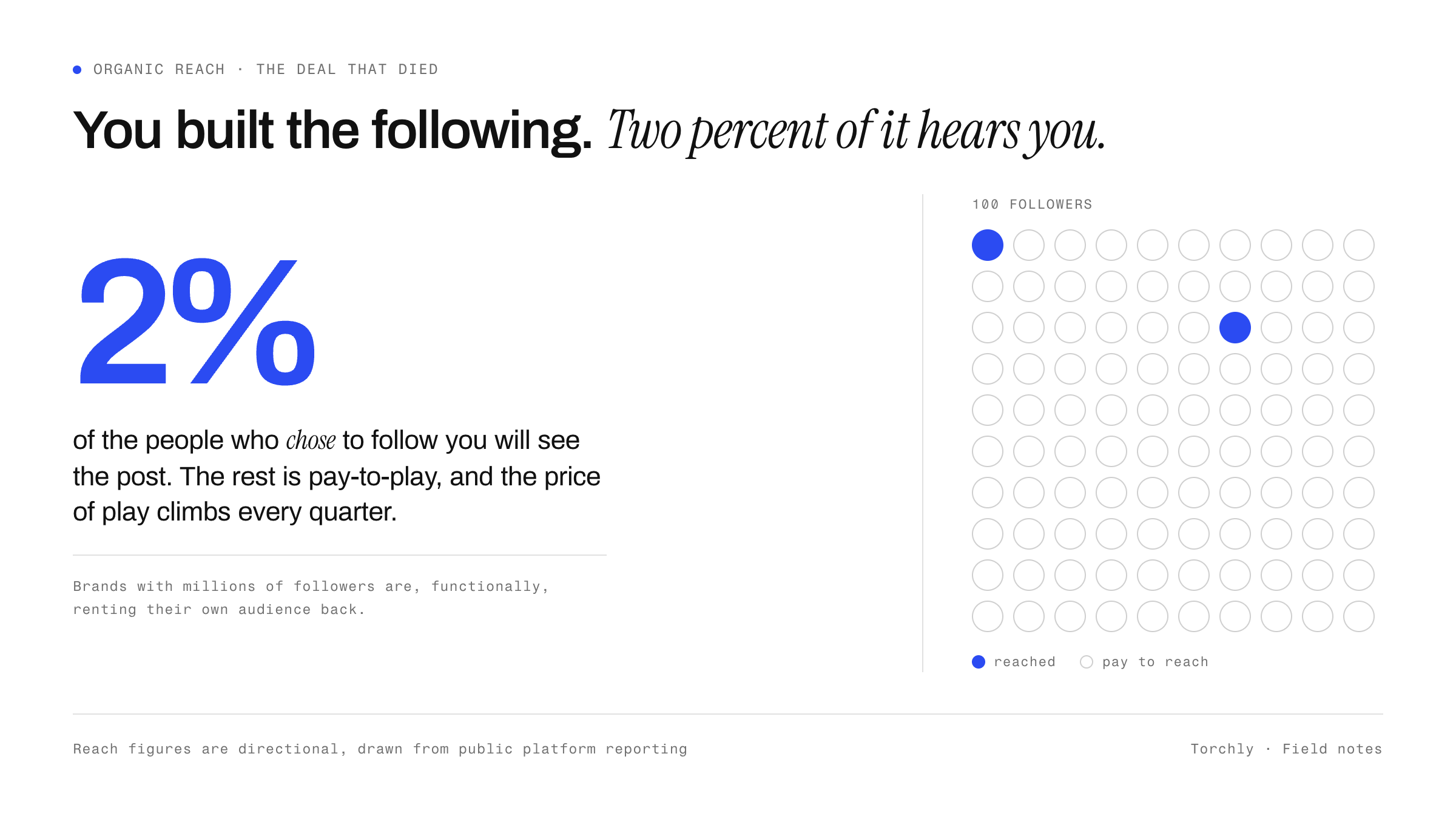
There used to be a deal: build a following on a public platform, and the platform would let you talk to it. That deal is dead. Organic posts on the major feeds now reach roughly two percent of the people who chose to follow you – the rest is pay-to-play, and the price of play climbs every quarter. Brands with millions of followers are, functionally, renting their own audience back.
The industry's answer has been "own your audience": start a newsletter, a Discord, a membership community. It works – eventually. Seeding a community, keeping it alive, moderating it daily, and growing it to the point where it moves product is a twelve-month project with a full-time cost. Most products don't have twelve months. Launches happen this quarter.
Why rent an audience from an algorithm – or spend a year building one – when the room you need already exists?
Because here's what actually happened while feeds decayed: the internet reorganized into private rooms. Group chats. Telegram channels. Discord servers. Slack workspaces. Small, dense, moderated spaces where an actively-engaged membership out-engages any public page by multiples – and where a recommendation from the admin lands with the weight of a friend's advice, because functionally that's what it is.
Those rooms were unmonetizable by design. No ad units. No API for trust. The only way in was to spam them – which kills the very thing that made them valuable – or to know the admin personally. That bottleneck is the entire opportunity: make the admin reachable, keep them in control, pay them properly, and track what happens like any performance channel.
That third path is what Torchly is. Not renting. Not a year of building. Borrowing trust, with the owner's consent, at performance-channel accountability. Reach figures above are directional, drawn from public platform reporting – the argument doesn't depend on the decimal.